The Lancaster Arts Hotel’s history starts long before anyone thought about boutique hotels. It starts in September of 1881, when a Lancaster man named Thomas Franklin sold a lot on Harrisburg Avenue to a New York merchant named Arnold Falk for $1,400. Falk built a 3.5-story double warehouse, sold half of it three months later to another merchant named Albert Rosenbaum, and that was that. Two men, one building split down the middle, and a city full of tobacco that needed storing.
For the next 60-plus years, that warehouse worked hard. Tobacco, mostly, until around 1945. After that, wholesale paper and twine. Then electronics storage. Then, like a lot of old industrial buildings in mid-century American cities, not much of anything for a while.
Despite being empty, it never lost its charm. The original brick walls, the massive timber beams, and the old wood floors worn in by decades of warehouse work were all the building’s most unique and appealing characteristics. When developers came looking in 2004, those features were still there.
What Did It Take to Actually Restore the Building?
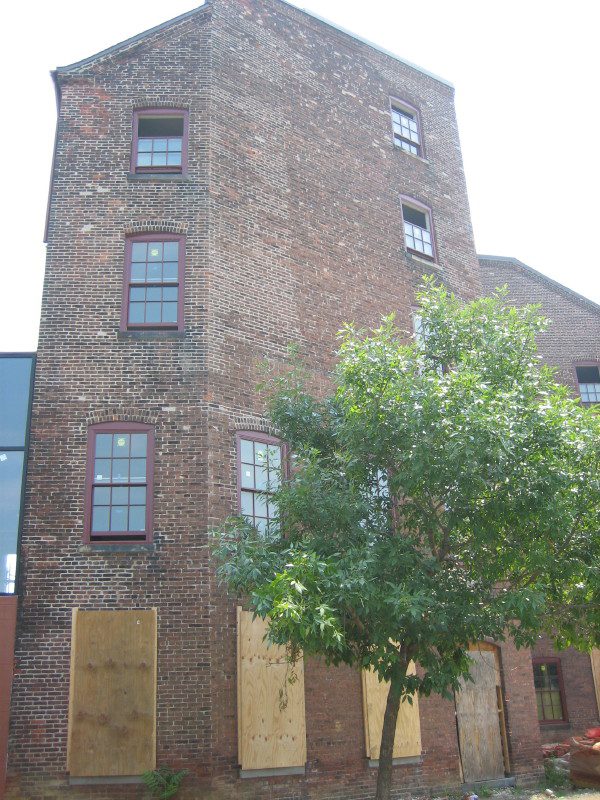
In 2004, a group of developers acquired the warehouse. Lancaster City was in the middle of something at the time. Franklin and Marshall was expanding. New galleries were popping up downtown. Clipper Magazine Stadium had just brought crowds back to the neighborhood. So, the building was empty, but the timing was just right to bring it back to life.
Architect Deborah Stuart led the interior design with one guiding idea she called “sympathetic modern.” Newer elements, like the open staircase in the lobby, were designed to look unmistakably new. That way, guests could always tell where the original building stopped and the renovation picked up. But the fire doors, floors, and the original brick stayed.
The renovation ran about five million dollars and took two years. When the doors opened in 2006, the 63-room, 35,000-square-foot hotel came with a restaurant, bar, and event space built to the same standard as everything else in the building.
How Did the Art End Up Being Such a Big Part of the Story?

The developers had a clear intention from the beginning. They wanted local artists, not licensed prints or commercial reproductions. A rotating gallery off the lobby was set up to feature a different Lancaster artist each month. Rooms were named for local historical figures, including sculptor Blanche Nevin, who created the lion in Reservoir Park, and the largest suite carries the name of Charles Demuth, the Lancaster-born modernist painter whose work now hangs in the Met.
Most of the furniture was made by Pennsylvania craftspeople. John Martin of New Holland built the four-poster beds and the tobacco chairs in the lobby and suites, a nod to the building’s past that most guests probably notice before they know why. Pieces from American Atelier of Allentown rounded out the mix.
Two decades later, the collection has grown to more than 260 original artworks valued at over $300,000, representing 36 artists. The pieces are displayed throughout the hotel in hallways, guest rooms, and shared spaces. The first-floor art gallery is open to the public, not just guests, which is the kind of commitment to Lancaster’s creative community that goes beyond décor. After spending a morning at the Demuth Museum a few blocks away or catching a show at the Fulton Theatre, coming back to a building where the art conversation keeps going just feels right.
What Makes This a Historic Hotel in the Real Sense?

The building is on the Pennsylvania Register of Historic Places, and it holds membership in Historic Hotels of America through the National Trust for Historic Preservation. That designation means something specific. The original brick walls, massive timber beams, and old wood floors have been preserved. The large steel fire doors remain as authentic industrial features of the building, unchanged from the warehouse era.
Among historic hotels in Pennsylvania, few have a story this specific or a restoration this honest about what the building was. There is no faux-industrial aesthetic here. The aesthetic is the building.
What Does a Stay Here Actually Feel Like Now?
Twenty years in, the amenities around those warehouse bones have only gotten more thoughtful. Evening turndown service, which is rare in Lancaster, means you come back to a room that has been quietly refreshed, a rose and chocolates on the pillow, plush robes laid out and waiting. A complimentary deluxe continental breakfast starts every morning without you having to find a table somewhere in the city. Free covered parking means arriving in downtown Lancaster without the usual hassle. Complimentary bicycles make it easy to follow the brick sidewalks to Lancaster Central Market and back at a pace that actually lets you see the city.
Twelve rooms have whirlpool tubs. The suites have kitchenettes. The building has a fitness center and YMCA passes. For anyone planning a romantic weekend in downtown Lancaster, these details stack up fast.
Ready to See It for Yourself?
A lot of hotels will tell you they have character. This one has 145 years of it in the walls. After a full day exploring downtown Lancaster City, whether that means Lancaster Central Market, the galleries on Prince Street, a show at the Fulton, or dinner somewhere nearby, coming back to a building that has been part of this city since before any of it existed puts the whole trip in a different light.
Lancaster Arts Hotel’s history has spanned past the two decades it’s been the perfect place to stay when visiting the area. With the hotel marking 20 years of operation this year, there is no better time to stay with us. Check availability and book your stay today, or reach out to ask about wedding accommodations and room blocks for your guests.